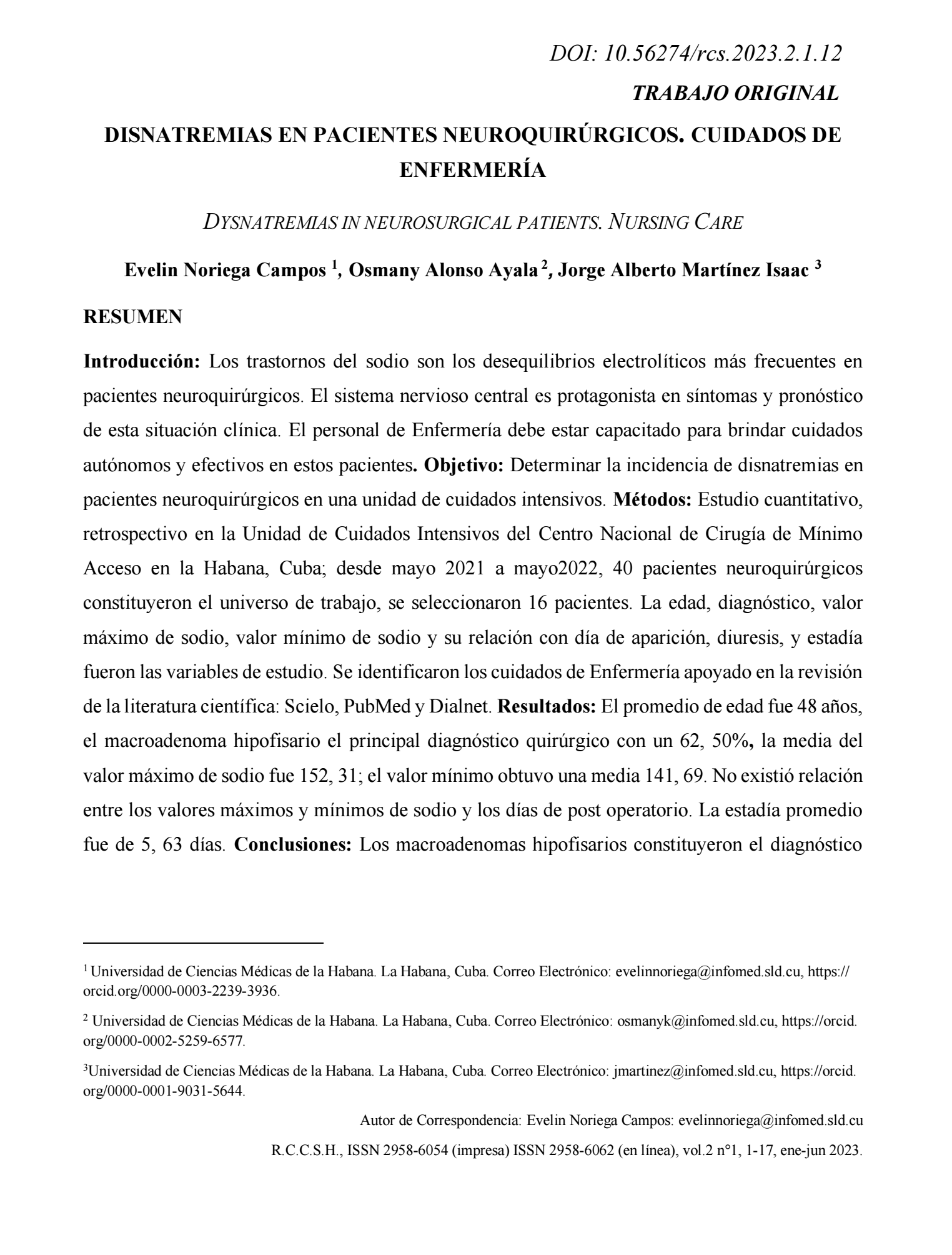
DYSNATREMIAS IN NEUROSURGICAL PATIENTS. NURSING CARE
https://doi.org/10.56274/rcs.2023.2.1.12
Keywords:
Sodium; Intensive care; Neurosurgical patients; NursingAbstract
Introduction: Sodium disorders are the most frequent electrolyte imbalances in neurosurgical patients. The central nervous system is the protagonist in symptoms and prognosis of this clinical situation. Nursing staff must be trained to provide autonomous and effective care in these patients
Objective: To determine the incidence of dysnatremias in neurosurgical patients in an intensive care unit. Methods: Quantitative, retrospective study in the Intensive Care Unit of the National Center for Minimal Access Surgery in Havana, Cuba; From May 2021 to May 2022, 40 neurosurgical patients constituted the universe of work, 16 patients were selected. Age, diagnosis, maximum sodium value, minimum sodium value and their relationship with the day of onset, diuresis, and stay were the study variables. Nursing care was identified based on the review of the scientific literature: Scielo, PubMed and Dialnet. Results: The average age was 48 years, the pituitary macroadenoma was the main surgical diagnosis with 62.50%, and the mean maximum sodium value was 152.31; the minimum value obtained a mean of 141.69. There was no relationship between the maximum and minimum values of sodium and postoperative days. The average stay was 5.63 days. Conclusions: Pituitary macroadenomas constituted the most frequent surgical diagnosis. Hypernatremia was the most observed dysnatremia. Nursing care is decisive in the recovery of patients
Downloads
Downloads
Published
How to Cite
Issue
Section
License
Copyright (c) 2025 Revista científica en ciencias de la salud humana – RCCSH

This work is licensed under a Creative Commons Attribution-NonCommercial-ShareAlike 4.0 International License.

